- The C.R.E.A.M. Report
- Posts
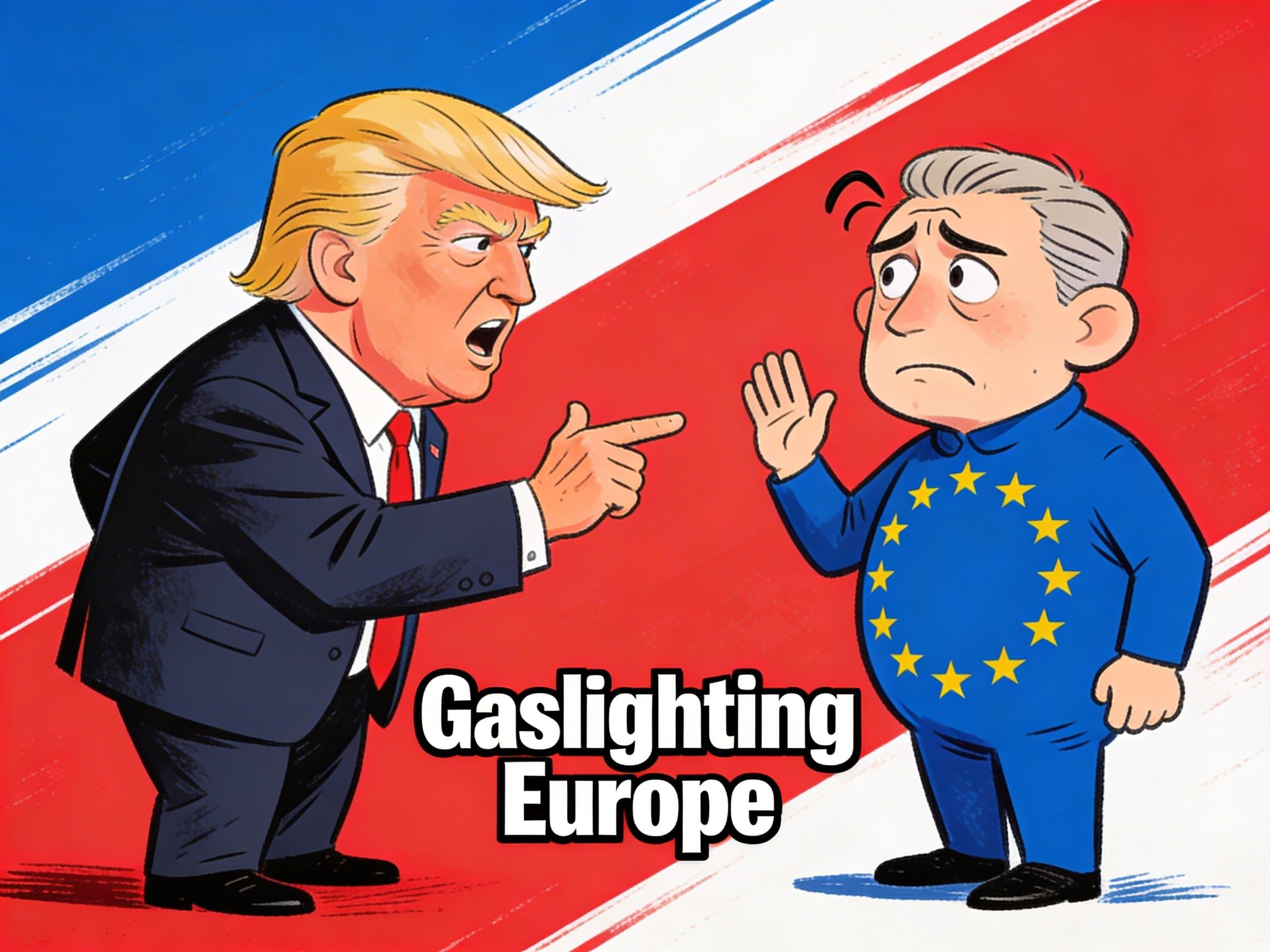
- Trump Gaslights The EU...
Trump Gaslights The EU...
Get Your Own Oil Then...!!

Kevin Davis
April 07, 2026

Above Average Info For The Average Joe…
WHEN INVESTING BECOMES A LIFESTYLE YOU WEAR IT!
NEW MERCH ALERT - WEALTHY RED - Limited Quantities - Grab Yours Today! CLICK HERE

WEALTHY RED…
Oil Pivot….
Courtesy of AskiDojo.Ai/Launch
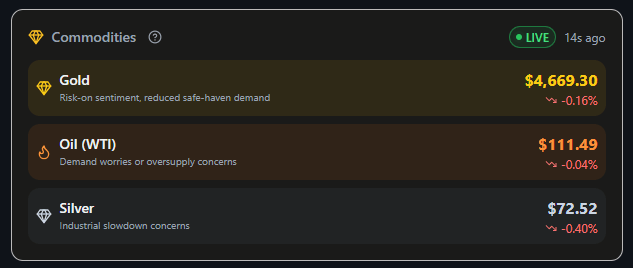
Oil is the biggest market pivot right now because its elevated prices—WTI at $110.27 after whipping from a $9.14 high—threaten persistent inflation, corporate margins, and the S&P 500 bull market survival amid US-Iran Strait of Hormuz tensions.:
Why Oil Dominates the Macro Narrative
Elevated oil doesn't just spike temporarily like past shocks; partial Hormuz restrictions could embed a "sustained geopolitical premium indefinitely," forcing firms to pass costs to consumers without margin absorption. Morgan Stanley sees this as stagflationary: dragging consumption and profits across developed/emerging markets, with second-round inflation effects outweighing any growth slowdown.
Evercore flags oil as the "lynchpin" for equities—WTI must retreat below March's $96.05 high (now ~$110 on May contracts) to dodge "lasting damage" to stocks and avoid $9.14/gallon gasoline by Memorial Day, which crushes consumer spending. S&P 500's 10% drop from January's 7,002 peak ties directly to oil's climb from $55 to $84.89 amplifying AI worries, valuations, and geopolitics.
Policy & Sector Ripples
●Fed/ECB/BOE Split: Fed pauses cuts into 2027 if inflation drifts; ECB/BOE tighten on expectations. Emerging markets face fiscal traps—subsidies sustain demand/inflation, pass-through kills growth.
●Winners/Losers: Energy exporters (XOM, CVX up 40% YTD) thrive; airlines, discretionary, refiners bleed from premiums.
●Bull Case Hinges Here: Earnings upgrades (S&P EPS to $9.14) + historical geo-risk rebounds (13.6% avg S&P gain post-spikes) support rally if oil fades.
Watch Trump's April 7 deadline and crude inventories—escalation to $120+ flips risk-off; relief unwinds the $20 premium fast.
JOIN THE WAITLIST: APRIL 18TH AskiDojo.AI/Launch
The Playbook….
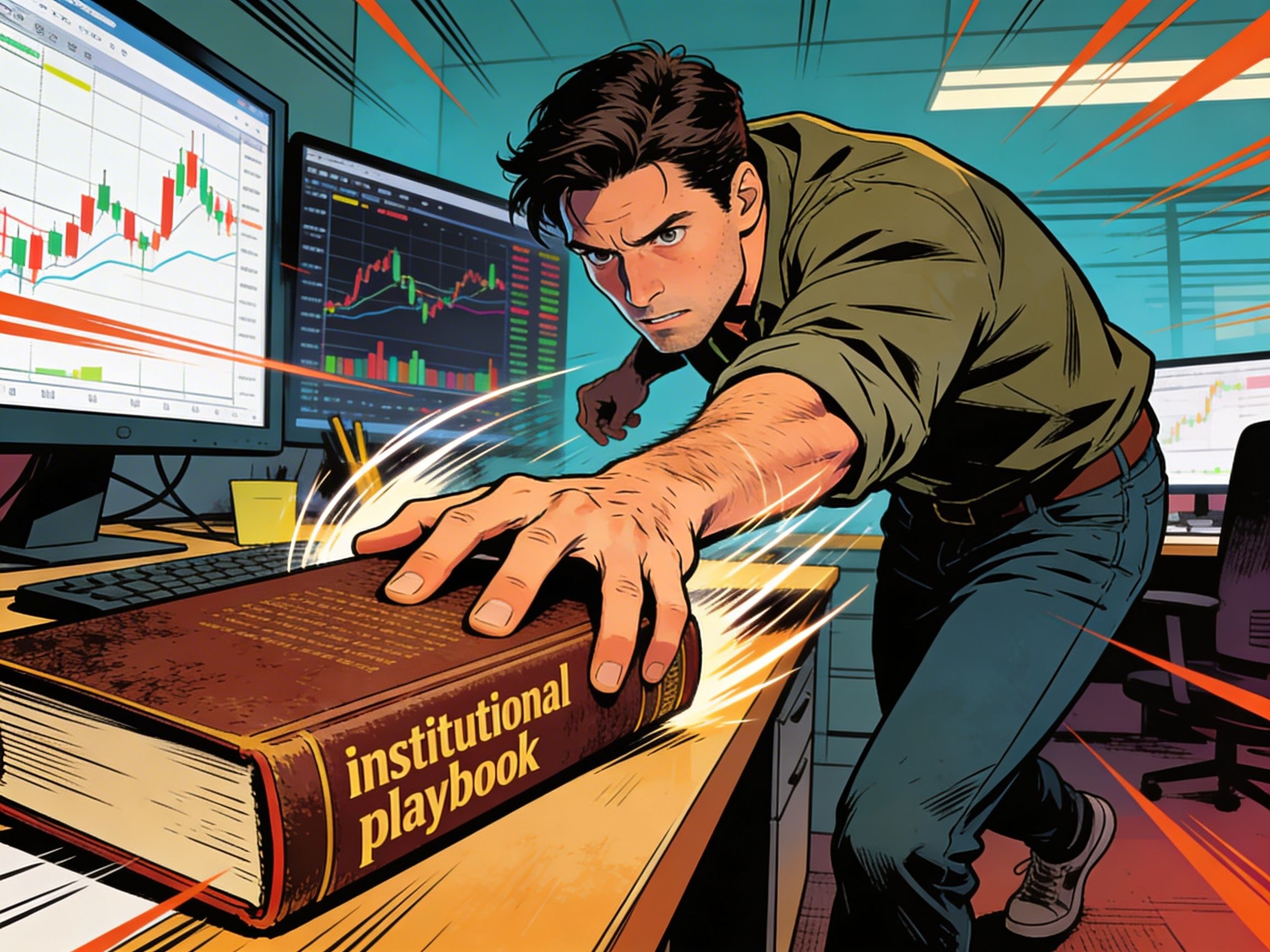
Today’s issue is a public service announcement for anyone still under the delusion that “free markets” mean “fair markets.” This is your buyer‑beware, cynic‑approved field manual for how the game is actually played on your back.
Below is the unofficial–official market maker playbook: how they toy with your emotions, control the narrative, and quietly vacuum your account one “smart decision” at a time.
Forget “price discovery.” Think “behavior modification experiment with candles.”
• The Stop‑Hunt Special
Your broker calls it “risk management.” The market calls it “where the food lives.” Retail loves clustering stops just below obvious support: last swing low, yesterday’s low, round numbers like 50.00 or 100.00. So what happens? Price slices down five to twenty cents through that level, your stop sells at the worst tick, then price instantly reverses and trends in the direction you originally wanted.
You call it “unlucky.” They call it “lunch.”
• Fake Breakouts for FOMO Harvesting
The classic: price compresses under a clear resistance, Fintwit starts whispering “coiled spring,” and every amateur technician draws the same breakout line. The second price pokes through, you chase. Then volume evaporates, a few big blocks hit the tape, and suddenly that “confirmed breakout” is a full‑fledged rug pull.
Result: you bought their exit.
Ever seen that last 10‑minute candle that turns a red day mysteriously green right before the close? That’s not “organic enthusiasm.” That’s positioning and optics—moving the close to:
• improve marks on options
• manufacture a bullish daily candle
• trigger backtest‑driven algos for tomorrow
Retail shows up next morning, sees a bullish daily pattern, and buys… into someone else’s carefully staged yesterday.
The ladder you stare at is less “truth” and more “Instagram filter.”
• Spoofing: The Legal‑Until‑It’s‑Not Magic Trick
You see a gigantic buy order parked below, think “strong demand,” and suddenly feel safer buying. Then, just as price approaches, that order vanishes like your conviction on a 3% drawdown. Large visible resting orders are often just theater—there to move your expectations, not their inventory.
• Sell Walls and Buy Walls
You see a massive sell wall at 20.00 and think, “No way this breaks; I’ll short against it.” That’s adorable. The wall may:
• never intend to fill
• be pulled right before the real move
• exist solely to corral your positioning
When the wall disappears, price charges straight through, and your “low‑risk short” becomes an involuntary momentum buy.
• Quote Flickering and Micro‑Noise
High‑speed participants spam orders in and out so fast that the picture you see is basically a hallucination. Tiny retail stops around tight intraday levels get harvested in noise that’s invisible on your chart but very real in your P&L. You think your strategy is bad; often, your stop placement is just perfectly located on the menu.
The price is the story you trade, but the story you hear is curated.
• Media as Mood Control
When big money wants out of a crowded long, suddenly headlines shift:
• “Regulatory fears may weigh on sector…”
• “Analyst trims price target amid uncertainty…”
Fear increases supply. They’re selling to you on the way up and scaring you out on the way down, depending on which side they need you on.
• Rotating Fads: From AI Savior to AI Bubble
Notice how themes rotate just long enough to let latecomers get wrecked?
• AI is the future → momentum & call buying
• “AI valuations stretched” → downgrades, narratives about bubbles
• Flows rotate to the next story (energy, defense, whatever needs a pump)
By the time retail feels emotionally safe in a theme, it’s already inventory they’re trying to unload.
• Social Amplification
Forums, TikTok, X threads: these are now sentiment plumbing. A big options player can load up, then “information” and memes mysteriously appear reinforcing their trade. You think you’re part of a movement; you’re usually part of someone else’s exit strategy.
The biggest edge isn’t hidden data—it’s that you are painfully predictable.
• Everyone Draws the Same Lines
Support at the prior low. Resistance at the prior high. Stops “just below” or “just above.” Retail crowd psychology piles orders at the same coordinates, making them perfect liquidity pools. The market doesn’t “respect levels.” It harvests them.
• The “Breakout Trader” Squeeze Toy
You enter on every break of yesterday’s high with a tight stop under the breakout candle. The playbook:
• push through the high to trigger your entry
• reverse, hit all those tight stops
• resume the broader trend after you’re out
Your strategy wasn’t “wrong.” It was loudly advertised.
• Payment for Order Flow: Farm to Table
Your “zero‑commission” broker sells your orders to internalizers who:
• see your flow in aggregate
• know it’s mostly uninformed
• systematically capture spread and adverse selection against it
You get a nice‑looking fill and a dopamine hit from instant execution. They get a statistically reliable edge across millions of trades. You’re not the client; you’re the product.
Options: Where Hope Goes to Die:
Options are how you translate bad timing into maximum efficiency losses.
• The Gamma Guillotine
Retail buys short‑dated out‑of‑the‑money calls into a hyped catalyst. Market makers sell them and hedge. As price approaches your strike:
• hedging flows may drive it into the “fun zone”
• implied volatility is sky‑high
Then:
• catalyst passes
• IV collapses
• price barely moves or even ticks your way
Your contract loses 40–80% while price “did nothing wrong.” You didn’t just bet on direction; you bet on volatility, timing, and structure—all rigged against you by design.
• Pinning Price to Max Pain
That Friday afternoon where price mysteriously drifts toward the strike with the largest open interest? That’s not the market “naturally settling.” That’s flows around hedging and unwinding converging right where retail suffers maximum damage. Your weekly lotto calls decay to dust so someone else’s book balances nicely.
• The Illusion of Cheapness
A 0.15 call is not “cheap.” It’s mathematically priced to reflect your almost certain donation. You see “low cost, high upside.” They see “juicy expected value” on a long series of lottery tickets you’ll keep buying because occasionally you hit one, and that hit funds your delusion for six more months.
This is the part of the casino where the small print lives.
• Speed and Data Asymmetry
They see the queue before you. They see fragmented liquidity. They see statistical patterns of your behavior. You see a candlestick. They are playing poker with hole‑card cams; you are watching on a 10‑second delay.
• Spread Extraction and Hidden Costs
Even when you “win,” you pay:
• entry slippage
• exit slippage
• wide spreads during stress
• overnight gaps against your tight leverage
Over thousands of trades, the friction you don’t notice becomes their profit margin.
• Rule‑Set Design
From margin requirements to short‑sale restrictions to overnight news cycles, the structure is not built to maximize your probability of compounding wealth. It’s built to maximize participation and turnover. Your need to “do something” is act one. Your eventual capitulation is the finale.
So What Do You Do With This?
No, this is not a call to rage‑quit markets and start a goat farm (though that’s arguably a more honest business). It is, however, a request that you stop pretending you’re playing chess when you’re actually the pawn.
At a minimum:
• Assume every obvious level is a potential hunting ground, not a safe line in the sand.
• Treat narratives as positioning tools, not information.
• Know that “free” trading is paid for—with your edge.
• Respect that options are not lottery tickets; they’re engineered to make your hope decay on a schedule.
You won’t stop the game. But you can stop being surprised that it is a game.
JOIN THE WAITLIST: APRIL 18TH AskiDojo.AI/Launch
WHEN INVESTING BECOMES A LIFESTYLE YOU WEAR IT!
NEW MERCH ALERT - BILL GATES BLACK - Limited Quantities - Grab Yours Today! CLICK HERE

Trump Gaslights The EU…
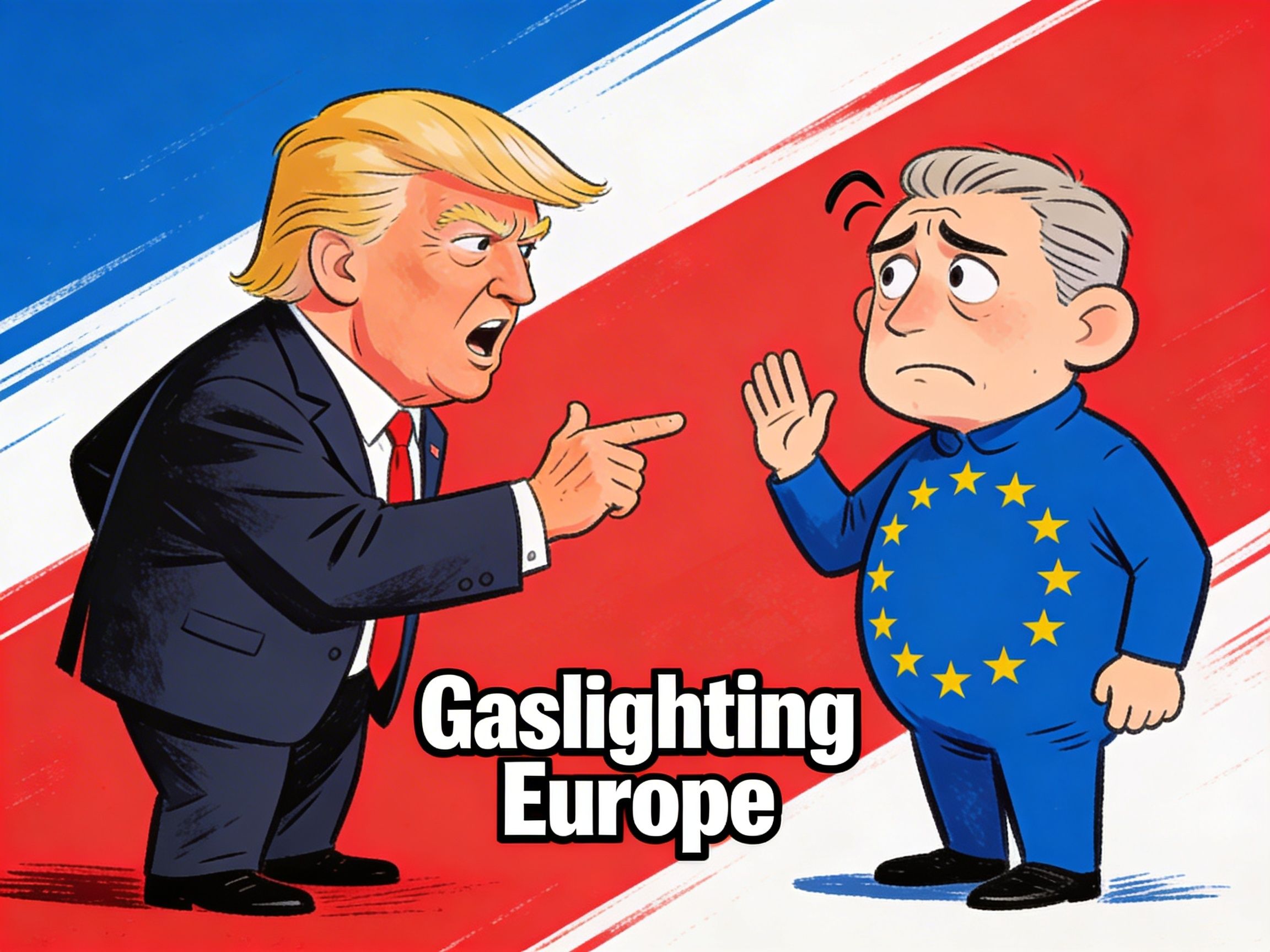
Trump’s Iran–Europe–Hormuz drama isn’t foreign policy; it’s set design for November. The Strait of Hormuz is just a very large, very wet campaign prop — like a swing state, but with more tankers and fewer undecided voters.
Europe, meanwhile, is sitting in geopolitical family court trying to keep the house. The “house” is energy security.
The judge is the oil market. Trump is standing in the doorway shouting, “We don’t even use that strait anymore — take it, you wanted independence, remember?”
He’s not wrong, which is the worst part for Brussels: the U.S. now exports more oil than it imports, and Europe is the one chained to $100+ Brent, begging the bailiff for a fuel subsidy.
This is the moment Europe discovers what “strategic autonomy” actually means. It’s great in EU white papers, inspirational in think‑tank PowerPoints, and devastating when the off‑switch to 20% of global oil gets flipped and the only navy you can send is a hashtag.
Trump’s line is brutally simple, which is why it polls well:
We’re energy dominant. Europe is not.
We have carrier groups. Europe has strongly worded statements.
We can choose whether Hormuz matters. Europe can’t.
So he hands them the keys.
Not because he’s a principled Noble realist.
Because the midterms are coming, and nothing juices a “strong leadership” poll like B‑roll of burning tankers, nervous Europeans, and a gas‑price chyron creeping higher while he yells, “Wouldn’t be happening if I were in charge.”
The Real Narrative is:
Close enough to a crisis to scare voters.
Far enough from U.S. troops taking heavy losses to avoid body bags on TV.
Just chaotic enough that Democrats look like exhausted hall monitors explaining “the importance of alliances” while everyone else just wants cheaper gas.
On the European side, the script has been the same for 70 years.
Washington pays most of the defense bill; Europe pays in op‑eds. America brings the planes; Europe brings the panel discussions. Trump didn’t change the substance — he just ripped the polite wrapping paper off and shouted, “Hit 2% or find out what Article 5 looks like when the accountant walks out.”
Suez? America snatched the keys from Britain and France and reminded them who controlled the financial oxygen. Iraq 2003?
The U.S. charged in, “old Europe” tut‑tutted, the alliance cracked, and everyone smiled for the next NATO group photo like nothing happened. Crimea, 2014? Europe discovered sanctions; the U.S. discovered that Europe still hadn’t discovered defense budgets.
Now Iran closes Hormuz, oil rips higher, and Trump sees his favorite thing: leverage. Not on Tehran — on the evening news.
Because here’s the November math: every $10 on Brent buys him a few tenths of a point on “tough on enemies” as long as he can pin the pain on “weak Democrats” and “freeloading Europeans.” He doesn’t need a war; he needs a rolling crisis that never quite resolves, a cliffhanger season where he’s the only guy who “would have handled it.”
So he reframes abandonment as fiscal responsibility:
“We don’t need their oil.”
“We’re not paying for their defense.”
“If Europe wants to be grown‑ups, let them secure their own tankers.”
In Brussels, they hear: “Oh God, we’re on our own.”
In Trump’s campaign office, they hear: “Oh good, we just wrote the midterm ad.”
He gets to run the classic bit:
Democrats: anxious, world‑weary, explaining alliances in 17 steps.
Europeans: panicked but earnest, tweeting about “rules‑based order” from a continent that still can’t hit 2% without a panic attack.
Trump: the only guy in the room willing to say, “This deal sucks, I’m out, call me when you’re ready to pay.”
Gas prices become the scoreboard. In Europe, €2+ per liter turns every voter into a part‑time energy analyst and full‑time rage machine.
In the U.S., he tries to rig the perception game: global prices are high because Democrats “love windmills and Brussels more than drill rigs and Pittsburgh.”
The fact that the U.S. is now mostly insulated from the worst of a Hormuz shock is a feature, not a bug — it lets him shrug and say, “See? We’re fine. They’re not. Why are we still paying for them?”
Handing the keys back to Europe serves three midterm functions:
First, it creates a foil. Europe is the overeducated roommate who never pays rent on time but still lectures you about “community.” Every European complaint about U.S. “abandonment” is another clip he can play to a stadium of voters: “They miss our protection but they never wanted to pay for it. Not on my watch.”
Second, it turns gas prices into a loyalty test. If prices stay high while he’s screaming “Drill here, not there” and “We don’t need Hormuz,” any pain at the pump becomes Exhibit A that Democrats chose globalism over your commute. It doesn’t matter that pipelines, refineries, and OPEC don’t move on campaign timelines.
What matters is that he can point to the price sign and say, “That number is their fault.”
Third, it recasts foreign policy as domestic discipline. Backing NATO, supporting Ukraine, patrolling Hormuz — all become framed as “sending your tax dollars to people who won’t defend themselves.” Saying no becomes “standing up for the American worker.”
The less Washington acts like Europe’s security blanket, the more he can argue, “Look at the chaos when they’re left alone. Only I can handle these people — and I’m done letting them live on your dime.”
From Europe’s perspective, this is the nightmare version of “strategic autonomy.” For a decade, “European sovereignty” was a vibe: conferences, essays, a few new acronyms. Now it’s tankers, premiums, and spreadsheets. Sovereignty turns out to come with a fuel surcharge and no customer support line.
You can almost script the EU press conference:
“We reaffirm our commitment to a strong, united, independent Europe.”
Translation: Please reopen the strait and send your navy back.
“We must reduce our reliance on external security guarantees.”
Translation: But not yet. Definitely not before winter.
Meanwhile, Trump runs his favorite electoral arbitrage: turn global instability into domestic blackmail. “We can protect your liberty. Europe can’t protect its own tankers. They need us more than we need them. So why are Democrats still paying their bills?”
The genius, from his angle, is that Europeans have no good speaking role in this drama. If they complain, they prove his point that they’re dependent. If they posture about autonomy, they remind everyone they still can’t sail through a shooting gallery without American cover. If they quietly scramble behind the scenes to patch things up, nobody sees it — but the prices remain, and the headline still reads: “Europe in Crisis as U.S. Steps Back.”
So yes, he’s handing the keys back. Not out of strategic enlightenment, but out of electoral economics.
The November tagline almost writes itself:
“We told Europe to act like a superpower. They couldn’t. Your gas went up. Put me back in and I’ll stop paying for their drama and fix yours.”
What Brussels calls a transatlantic crisis, he calls a campaign asset. What they see as abandonment, he sells as fiscal responsibility. And what everyone else experiences as a slow‑motion oil shock, he pitches as Exhibit A in the case for firing the current management.
In the end, the real Strait of Hormuz is the narrow channel between voter anger and voter apathy. Trump’s bet is simple: close that strait, force everyone’s attention through it, and make sure that when the tankers are burning on screen, the only person who looks like he enjoys the fire is also the only one promising to “turn the tap back on.”
JOIN THE WAITLIST: APRIL 18TH AskiDojo.AI/Launch
WHEN INVESTING BECOMES A LIFESTYLE YOU WEAR IT!
NEW MERCH ALERT - BUY THE DIP NAVY - Limited Quantities - Grab Yours Today! CLICK HERE

BUY THE DIP NAVY…
JOIN THE WAITLIST: APRIL 18TH AskiDojo.AI/Launch
Thank you for reading, we appreciate your feedback—sharing is caring.
Reply